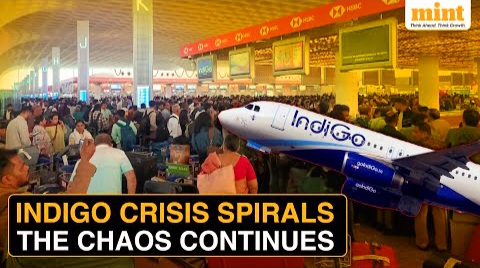
Scenes of frustration and uncertainty have taken over India’s busiest airports as IndiGo, the country’s largest airline, continues to battle massive flight disruptions for the fourth straight day. Long queues at check-in counters, anxious faces in waiting lounges and repeated announcements of cancellations have become an everyday sight for travellers across the country.
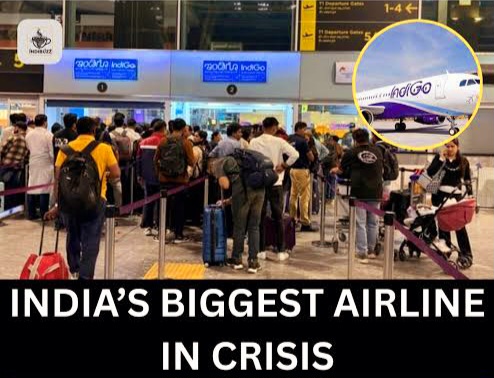
Over the last four days, more than 1,000 flights have been cancelled by IndiGo, leaving thousands of passengers stranded or forced to rethink their travel plans at the last minute. The worst impact has been seen at major hubs such as Delhi, Bengaluru and Hyderabad, where operations have been hit the hardest. In some terminals, arrival and departure boards have turned into digital walls of red as more flights disappear hour after hour.
Passengers have shared stories of waiting for hours without clear information, struggling to rebook tickets, and facing frequent changes in departure timings. For many travellers, what was supposed to be a routine journey turned into an exhausting and emotional experience.
IndiGo has said the disruption is due to a “multitude of unforeseen operational challenges.” The airline has listed minor technical issues, congestion at airports, winter schedule adjustments and unfavourable weather conditions as the reasons behind the crisis. However, aviation experts and regulators point to a deeper issue that lies at the heart of the chaos.
The major trigger behind the disruptions is the new Flight Duty Time Limitations (FDTL) that recently came into effect. These rules limit how long pilots and cabin crew can remain on duty and make minimum rest periods compulsory. The change aims to reduce fatigue among aviation staff, improve alertness, and increase safety for passengers.
While the intentions behind FDTL are well-founded, its sudden implementation and IndiGo’s struggle to adapt to the new rules have led to a shortage of available crew members. Flights have had to be cancelled simply because pilots and crew have exceeded their permitted duty hours or are legally required to rest.
What makes the situation more concerning is that IndiGo operates the largest number of daily flights in the country. Any disruption within its system therefore creates a ripple effect across India’s entire aviation network. When India’s biggest airline stumbles, the entire industry feels the shake.
Aviation authorities have stepped in to monitor the situation closely, urging airlines to follow crew welfare regulations while also ensuring better planning and coordination. IndiGo, on its part, has issued public apologies and asked passengers for patience as teams work round the clock to stabilise operations. Additional aircraft, alternate crews and operational changes are being introduced to gradually return services to normal.
What Do We Learn From This?
This crisis highlights an important truth: safety rules cannot be applied overnight without preparation. While the FDTL rules are essential to protect both crew and passengers, airlines need time, training and manpower to adjust operations smoothly.
The episode also underlines the importance of clear communication. When flights are delayed or cancelled, passengers deserve timely and transparent updates. Silence at counters only adds to panic and frustration.
Finally, the incident reminds us that aviation is not just about aircraft and runway schedules. It is about people – pilots, crew members, ground staff and passengers. When even one part of this system is under strain, the impact is felt across the entire chain.
As IndiGo works towards restoring normal operations, this disruption will likely serve as a lesson not only for one airline but for the entire aviation sector. Rules may be written on paper, but real-world planning, compassion and accountability decide how well those rules take flight.
 The Momma Clan
Leave a comment