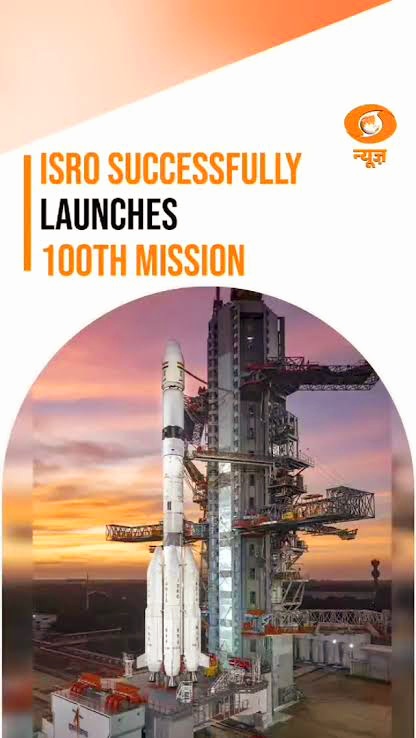
In a defining moment for India’s space sector, the Indian Space Research Organisation (ISRO) successfully launched its 100th mission from Sriharikota, marking a historic milestone in the nation’s space journey. The GSLV-F15/NVS-02 Mission lifted off from the Satish Dhawan Space Centre, reinforcing India’s growing dominance in space exploration.
Union Minister of State for Space, Dr Jitendra Singh, hailed the achievement, calling it “not simply another landmark milestone” but a “quantum leap” in India’s space endeavours. His words underscored the remarkable progress made by ISRO, particularly in the last decade, under the leadership of Prime Minister Narendra Modi.
A Legacy of Determination and Growth
India’s space agency was established in 1969, yet its journey to developing a robust launch infrastructure took time. It was only in 1993 that ISRO set up its first launch pad at Sriharikota, 24 years after its inception. Another decade passed before the second launch pad was commissioned in 2004. However, the landscape of India’s space programme has transformed dramatically in the past ten years, witnessing expansion in both infrastructure and investment.
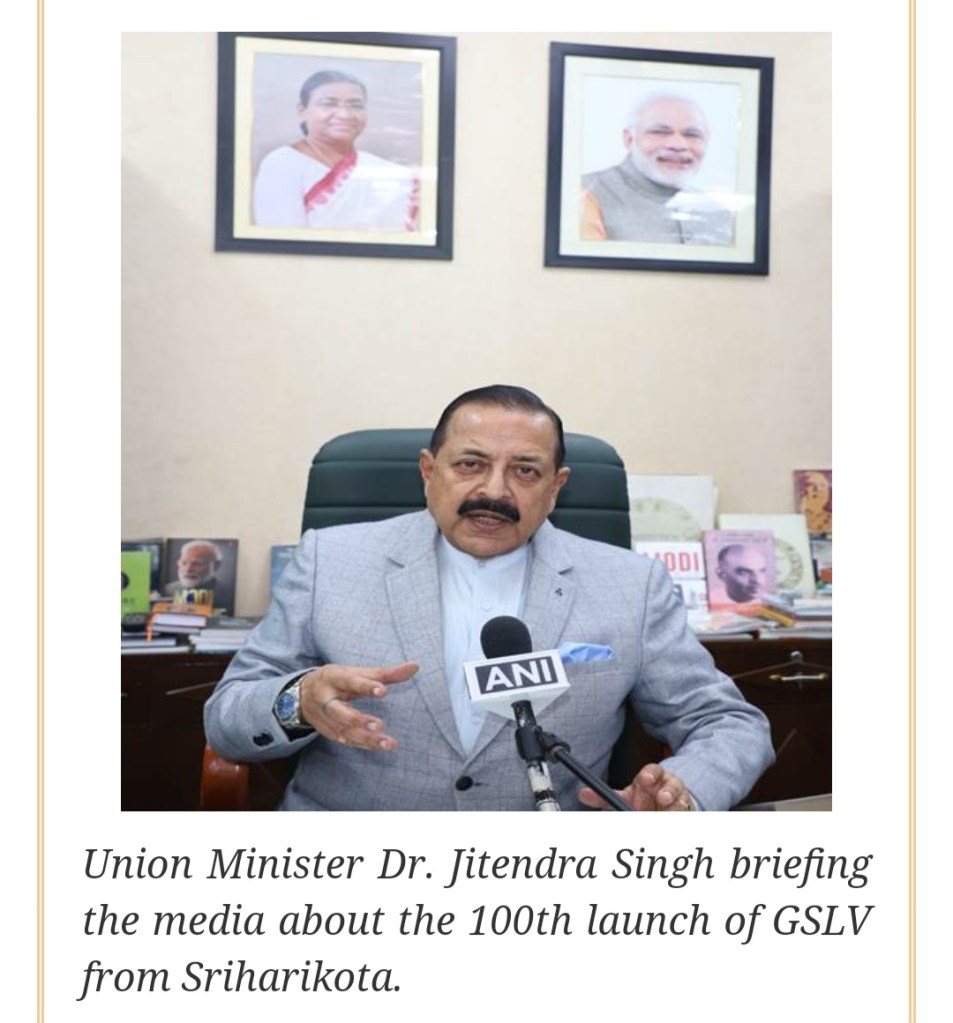
Dr Jitendra Singh highlighted this transformation, noting that what did not happen in six decades has now become a reality in just ten years. The 100th launch is a testament to the accelerated growth and modernisation of ISRO.
Unprecedented Expansion and Future Prospects
One of the most significant developments in India’s space sector is the construction of a third launch pad at Sriharikota. However, the expansion does not stop there. India is now venturing beyond Sriharikota, with a new launch site being developed in Tamil Nadu’s Tuticorin district. The foundation stone for this project was laid in February 2023 by Prime Minister Modi, marking a new era of decentralisation in India’s space infrastructure.
The new launch pad in Tuticorin is expected to enhance ISRO’s launch frequency and capacity, reducing dependency on Sriharikota and providing a strategic advantage for future missions.
ISRO’s Streak of Achievements
This milestone comes at a time when ISRO has been achieving global recognition. In the past few years, India has:
- Successfully launched the Chandrayaan-3 mission, making it the first nation to land near the Moon’s South Pole.
- Conducted the Aditya-L1 mission, India’s first dedicated solar observatory.
- Advanced preparations for Gaganyaan, the country’s first human spaceflight mission.
- Strengthened international collaborations in space technology, positioning India as a key player in global space exploration.
The 100th launch further solidifies India’s reputation as a spacefaring nation with cutting-edge capabilities.
A Bright Future for India’s Space Sector
The recent developments underscore the Indian government’s commitment to expanding the space sector. The opening of a new launch site in Tamil Nadu, combined with increased private sector participation, is set to revolutionise India’s space industry. The growing number of start-ups and commercial ventures in space technology will drive further innovation and investment.
With each milestone, India moves closer to its vision of becoming a global leader in space exploration. As Dr Jitendra Singh stated, the 100th launch is not just a number but a representation of India’s rapid ascent in space technology.
From a modest beginning in 1969 to a space powerhouse today, ISRO’s journey is an inspiring tale of perseverance, ingenuity, and ambition. The 100th mission is not the destination, but a new beginning, setting the stage for even greater achievements in the years to come.

 The Momma Clan
Leave a comment