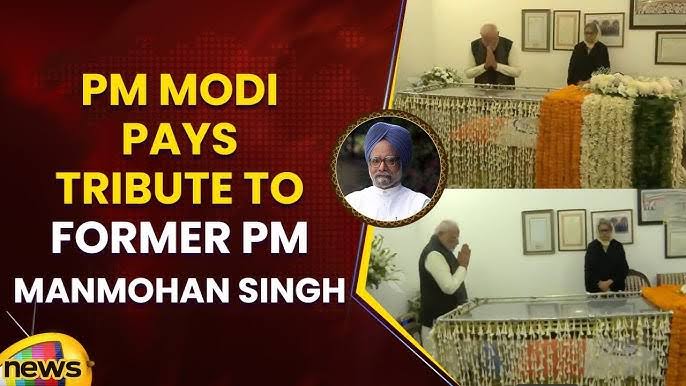
On a sombre Thursday, India bid farewell to one of its most distinguished statesmen, Dr Manmohan Singh, who passed away at the age of 92. The former Prime Minister, often regarded as the architect of India’s economic liberalisation, left an indelible mark on the nation’s political and economic landscape. His calm demeanour, intellectual acumen, and unwavering commitment to public service have carved him a unique place in the annals of Indian history.
The Journey of a Scholar and Leader
Born on 26 September 1932, in a modest village in Punjab, then a part of undivided India, Singh’s early life was shaped by scarcity and resilience. His academic brilliance was evident from the outset. After graduating from Panjab University, he pursued a master’s degree at the University of Cambridge and later a DPhil at Oxford University. Despite financial hardships, his determination and intellectual vigour propelled him to excel.
Before stepping into the political limelight, Singh enjoyed a prolific career as an academic and bureaucrat. He served as an economic adviser to the Indian government and as the governor of the Reserve Bank of India. These roles prepared him for the monumental task that awaited him in the 1990s.
The Architect of Economic Reforms
In 1991, as India teetered on the brink of economic collapse, Singh was unexpectedly appointed as Finance Minister under Prime Minister P.V. Narasimha Rao. In his maiden speech to Parliament, he quoted Victor Hugo: “No power on Earth can stop an idea whose time has come.” This statement heralded a new economic era for India.
Singh’s reforms dismantled the Licence Raj, devalued the rupee, cut taxes, and encouraged foreign investment. His policies revived the economy, curbed inflation, and set the stage for unprecedented growth in the 1990s. For many, Singh’s tenure as Finance Minister marked the dawn of a modern, globally integrated India.
A Decade at the Helm
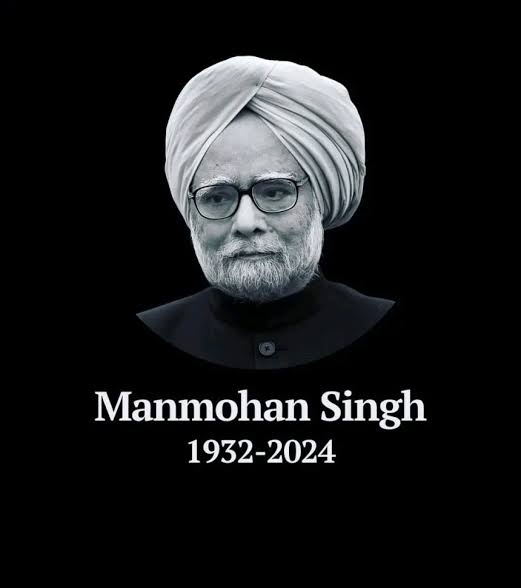
In 2004, Singh became India’s Prime Minister, leading the Congress party to victory. He was the first Sikh to hold the nation’s top office and the first since Jawaharlal Nehru to be re-elected after completing a full first term. His premiership saw significant milestones, including the Indo-US nuclear deal, which ended decades of nuclear isolation.
Singh’s tenure, however, was not without challenges. His second term was marred by corruption scandals, including allegations involving the allocation of coal blocks. Despite maintaining his innocence and dignity, these controversies tarnished his administration’s legacy and contributed to the Congress party’s defeat in the 2014 general election.
The Man Behind the Politician
Known for his reticent and self-effacing nature, Singh preferred action over rhetoric. His reserved personality was a stark contrast to the flamboyance often associated with Indian politics. Yet, his quiet determination and intellectual depth won him admirers across the political spectrum.
Singh’s personal integrity remained unimpeachable, even as he faced allegations during his tenure. Responding to criticism, he once remarked, “It is better to be silent than to offer thousands of answers.” His calm and composed demeanour exemplified his steadfastness amid adversity.
A Lasting Legacy

Manmohan Singh’s contributions extended beyond his years in office. In his later years, he remained an active voice in the Congress party and a commentator on pressing economic issues. During the COVID-19 pandemic in 2020, he urged the government to implement direct cash transfers, support businesses, and stabilise the financial sector. His suggestions underscored his enduring commitment to the welfare of the Indian people.
Singh will be remembered as a statesman who bridged India’s economic and nuclear isolation, an academic who transitioned into politics without losing his intellectual humility, and a leader who transformed challenges into opportunities. His journey from a remote village in Punjab to the Prime Minister’s Office is a testament to the power of education, resilience, and a steadfast commitment to public service.
Tributes to a Titan
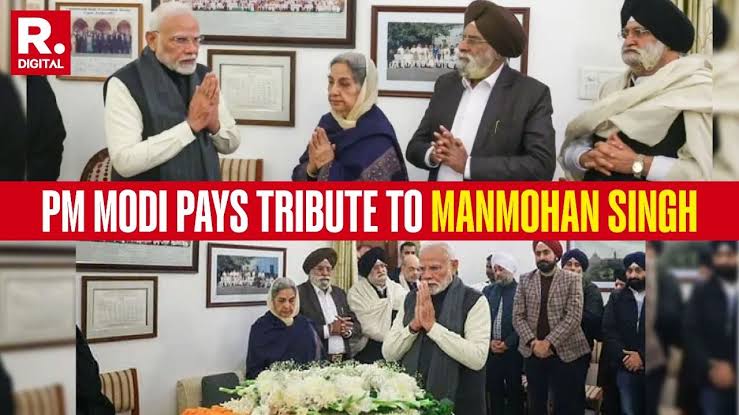
Prime Minister Narendra Modi led the nation in paying tributes, acknowledging Singh’s wisdom and humility, and his efforts to improve the lives of millions. Congress leaders Rahul and Priyanka Gandhi expressed profound grief, remembering him as a mentor and a courageous leader.
Manmohan Singh leaves behind a legacy that will be dissected and debated by historians, but one that is undeniably impactful. He was a visionary who, through his policies and principles, set India on a path to economic prosperity and global prominence.
As India mourns his loss, it also celebrates the life of a man who epitomised dignity in public service. Dr Manmohan Singh is survived by his wife, Gursharan Kaur, and three daughters, who, along with the nation, will cherish his memory as one of India’s most distinguished leaders.
May his soul rest in peace.
 The Momma Clan
Leave a comment