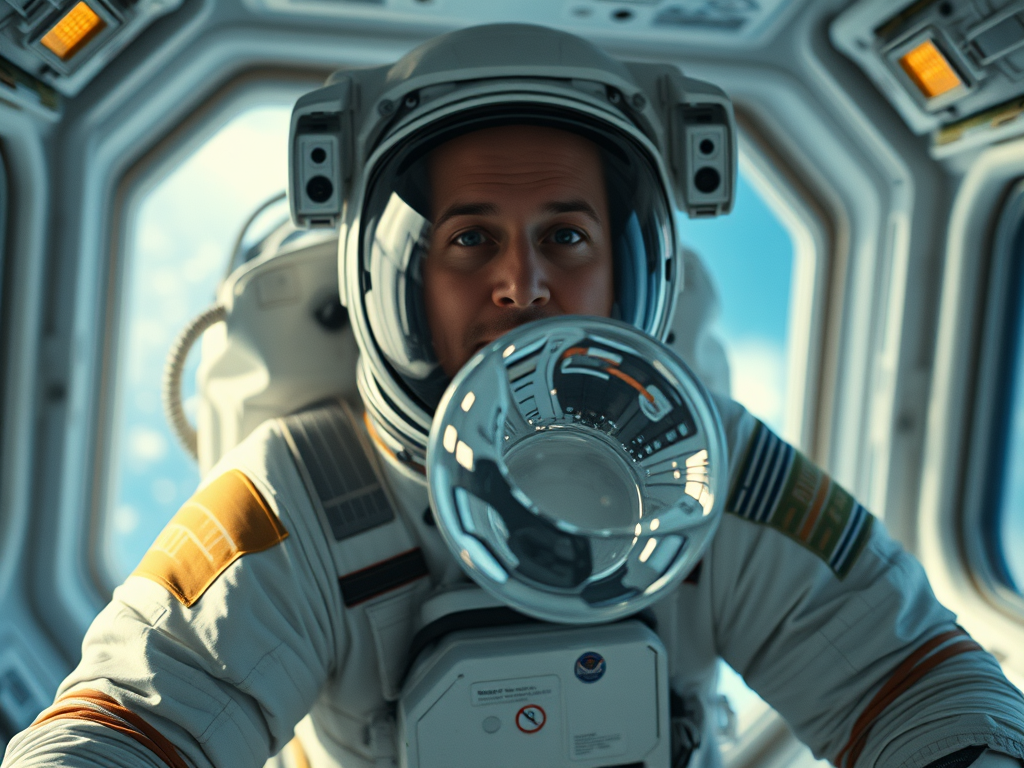

Life in space is filled with challenges that would baffle anyone used to the comforts of Earth. For astronauts aboard the International Space Station (ISS) or other spacecraft, adjusting to a zero-gravity environment brings its own unique set of obstacles. While we often marvel at their ability to float and work in space, there are many everyday activities that we take for granted that astronauts simply can’t do in space. Here are five things astronauts can’t do in space and the fascinating reasons why.
1. Cry Normally
On Earth, when you cry, tears roll down your face, flowing downward due to gravity. In space, however, tears behave very differently. Without gravity, they don’t flow or fall at all. Instead, tears stay on the astronaut’s face and pool around their eyes, causing potential discomfort. NASA astronaut Andrew Feustel once explained that crying in space feels more like a stinging sensation because the tears just stick around your eyeballs. Astronauts need to wipe them away, otherwise, the tears could blur their vision or even cause minor irritation. While emotional expression is still possible, the physical mechanics of crying are altered by the absence of gravity.
2. Pour and Drink Water the Way We Do
One of the simplest, most basic actions on Earth – pouring a glass of water – is impossible in space. Liquids in space don’t behave like they do under the influence of gravity. Instead of flowing smoothly, they form floating blobs due to surface tension. Astronauts must drink water and other fluids through specially designed containers with straws or pouches to avoid the mess of floating liquid droplets. There is no way to pour water into a glass or take a gulp like we do on Earth. Fluid management is a significant part of everyday life for astronauts, and even tasks as simple as staying hydrated require specialised tools.
3. Use Regular Toilets
Bathroom habits in space are vastly different from those on Earth. Astronauts can’t just use a typical toilet, because gravity isn’t available to pull waste downward. Instead, space toilets work on the principle of suction. Urine is collected using a vacuum tube, while solid waste is stored in sealed containers, which are either disposed of later or burned up during re-entry. The entire process is carefully managed because floating waste would be both unsanitary and dangerous in a confined spacecraft. NASA has spent years perfecting space toilet technology, making it one of the more critical aspects of daily life aboard the ISS.
4. Stand, Walk, or Run Normally
One of the most striking differences between life on Earth and life in space is the absence of gravity. Astronauts can’t stand, walk, or run in the way that we do on Earth because there’s no gravitational force pulling them down. Instead, they float through their living quarters, pushing off surfaces to propel themselves from place to place. While astronauts do use harnesses and treadmills to maintain muscle tone and simulate weight-bearing activities, it’s not the same as walking or running in Earth’s gravity. Without regular exercise, astronauts would experience rapid muscle atrophy and bone density loss, making physical fitness a major priority in space missions.
5. Sleep Comfortably Without Special Equipment
Sleeping in space isn’t as straightforward as drifting off in your bed on Earth. In zero gravity, there’s no “up” or “down,” and floating freely in your sleep can be dangerous. Astronauts use special sleeping bags tethered to walls or inside small compartments to keep themselves in place. Without this, they could drift into sensitive equipment or each other. Additionally, sleeping in space comes with the challenge of adjusting to a 90-minute day-night cycle as the spacecraft orbits the Earth. This can disrupt the astronaut’s circadian rhythm, leading to potential sleep disturbances. NASA provides astronauts with eye masks and melatonin supplements to help regulate sleep cycles in space.
The Peculiarities of Space Living
For astronauts, space exploration comes with a lifestyle vastly different from anything on Earth. The absence of gravity transforms the most mundane tasks, such as crying, drinking water, or sleeping, into complex activities requiring innovation and adjustment. While these challenges are significant, they are a small price to pay for the privilege of exploring the unknown frontiers of the universe. These limitations also serve as a reminder of just how different – and remarkable – life in space truly is. Whether it’s floating instead of walking or sipping water from pouches instead of cups, astronauts’ day-to-day experiences are uniquely out of this world.
As humans continue to explore further into space, perhaps one day these limitations will be overcome, allowing future astronauts a more Earth-like experience beyond our planet. Until then, the peculiarities of space life serve as fascinating reminders of the adaptability of the human spirit in the face of new and uncharted challenges.
Leave a Reply