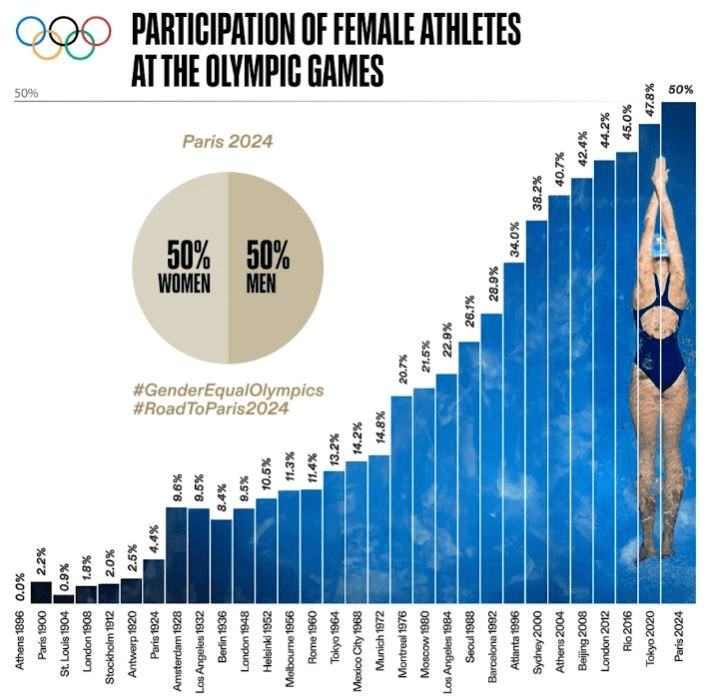
The 2024 Paris Olympics marks a monumental shift in the history of the Games. For the first time ever, there is full gender parity among athletes, with 50% of the participants being women. This achievement is a testament to the International Olympic Committee’s (IOC) commitment to promoting equality and empowering women in sports.
The journey toward gender parity in the Olympics has been long and challenging. Historically, women faced significant barriers to participation in sports, and their presence in the Olympics was minimal. The first modern Olympics in 1896 did not feature any female athletes. It wasn’t until the 1900 Paris Games that women were allowed to compete, and even then, they were only able to participate in five sports: tennis, sailing, croquet, equestrianism, and golf.
Over the years, women’s participation in the Olympics steadily increased. By the 1990s, the IOC began to actively promote gender equality by introducing new women’s events and encouraging National Olympic Committees (NOCs) to include more female athletes. The London 2012 Olympics was a turning point, with every participating country including female athletes for the first time.
The Paris 2024 Olympics is the culmination of these efforts, with the IOC achieving its goal of equal gender representation. This historic achievement is reflected in several key aspects of the Games:
1. Equal Quota Places: The IOC has distributed quota places equally to male and female athletes, ensuring that each gender has the same number of opportunities to compete. This approach not only guarantees gender parity but also emphasises the importance of fairness and inclusivity in sports.
2. Increased Women’s Events: The Paris Olympics features several new women’s events, further enhancing the visibility and representation of female athletes. These additions include women’s canoe sprint events, which were traditionally male-dominated, and new mixed-gender events that promote teamwork and collaboration across genders.
3. Leadership and Representation: The IOC has also made strides in increasing female representation in leadership roles within the Olympic Movement. Women hold key positions in the organisation, influencing decision-making and promoting policies that support gender equality.
The achievement of gender parity at the Paris 2024 Olympics has far-reaching implications for sports and society as a whole.
1. Inspiration for Future Generations: The visibility of female athletes competing at the highest level inspires young girls around the world to pursue their dreams in sports. By seeing women excel in various disciplines, aspiring athletes gain role models who demonstrate that gender should never be a barrier to success.
2. Breaking Stereotypes: Gender parity challenges traditional stereotypes about the capabilities of women in sports. The diverse range of events and the success of female athletes debunk myths about physical limitations and redefine what women can achieve.
3. Promoting Equality Beyond Sports: The Olympics serve as a global platform that extends beyond sports, influencing societal norms and values. By championing gender equality, the Games contribute to broader efforts to promote women’s rights and empower women in all spheres of life.
While the achievement of gender parity at the Paris 2024 Olympics is a significant milestone, there are still challenges to address. Ensuring equal access to resources, training facilities, and funding for female athletes remains a priority. Additionally, combating gender-based discrimination and harassment in sports is an ongoing effort that requires collective action from stakeholders at all levels.
Looking ahead, the IOC’s commitment to gender equality sets a precedent for future Olympic Games and other international sporting events. By building on this foundation, the Olympic Movement can continue to drive positive change and create a more inclusive and equitable world for athletes of all genders.
The 2024 Paris Olympics represents a turning point in the history of sports, celebrating the achievements of female athletes and reaffirming the Olympic Movement’s dedication to gender equality. As we witness this historic moment, we are reminded of the power of sports to unite, inspire, and transform. The Paris Games serve as a beacon of hope and progress, paving the way for a brighter and more inclusive future for all athletes.

 The Momma Clan
Leave a comment