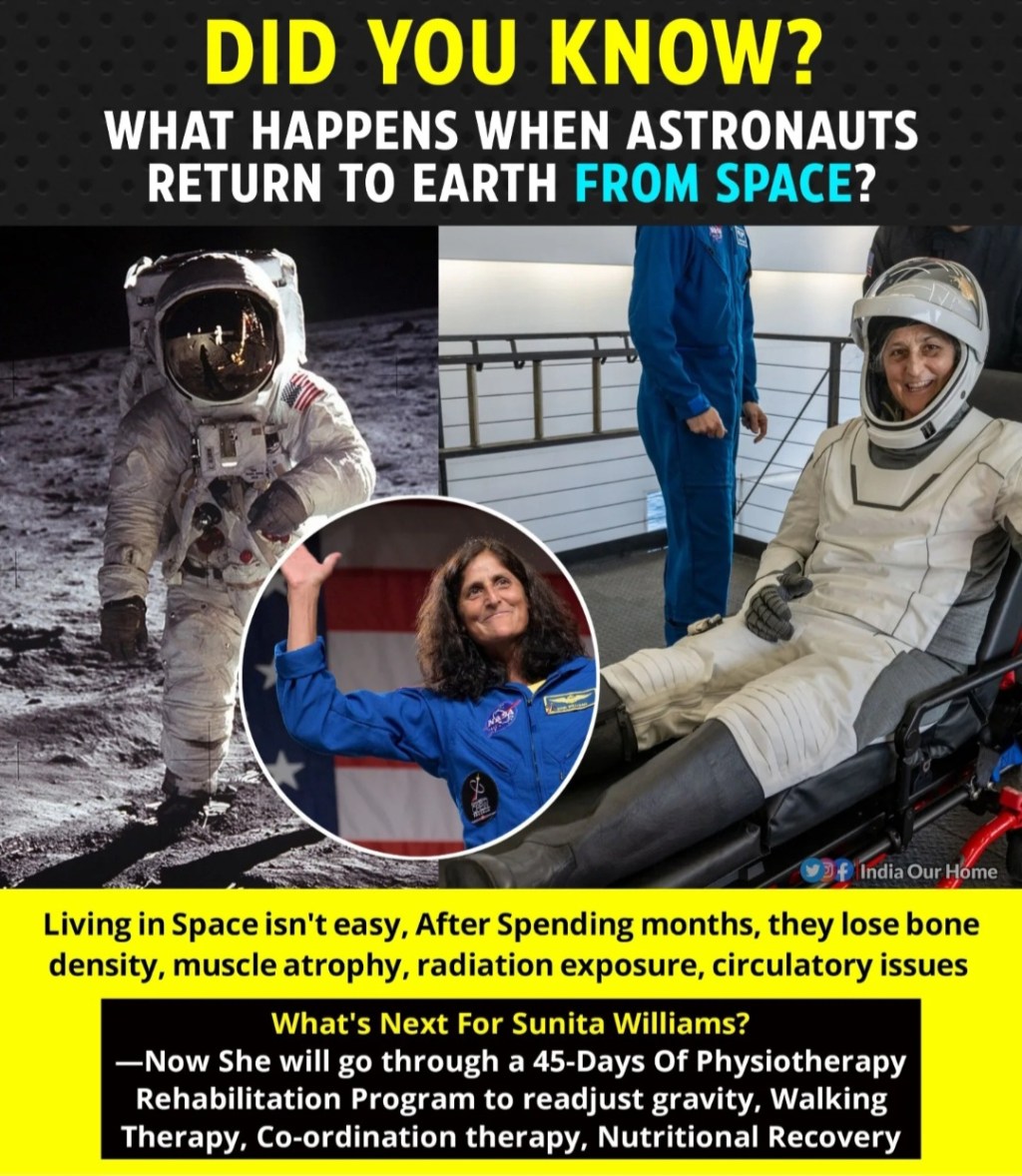
Spending months aboard the International Space Station (ISS) is an extraordinary feat that demands not only physical resilience but also mental endurance. Astronauts like Sunita Williams and Barry Wilmore, after their extended space missions, undergo an extensive post-mission recovery programme designed to counteract the effects of microgravity. From bone density loss to cardiovascular deconditioning, the human body experiences significant physiological changes in the weightless environment of space.
In this blog, we explore the challenges astronauts face upon their return to Earth, the detailed recovery regimens they follow, and why physical therapy is a cornerstone of their rehabilitation.
The Impact of Microgravity on the Human Body
Microgravity, the condition of near-weightlessness in space, has profound effects on various bodily systems. While astronauts float effortlessly inside the ISS, their muscles and bones are deprived of the resistance they experience on Earth. This leads to a series of adaptations and challenges, including:
- Muscle Atrophy:
Without the need to support body weight, muscles, especially in the lower back and legs, begin to shrink and weaken. Astronauts can lose up to 20% of muscle mass in just a few weeks. - Bone Density Loss:
The skeletal system, which normally bears the body’s weight, becomes fragile in space. Astronauts can lose 1-2% of bone mass per month despite regular exercise, making them susceptible to fractures upon return. - Cardiovascular Deconditioning:
In a gravity-free environment, the heart doesn’t need to work as hard to pump blood. Over time, this weakens the heart muscle, reducing overall cardiovascular endurance. - Balance and Coordination Issues:
The vestibular system, which controls balance and spatial orientation, is disrupted in microgravity. Upon landing, astronauts often experience dizziness, vertigo, and impaired motor skills. - Fluid Redistribution:
With gravity no longer pulling fluids downward, astronauts experience puffy faces and skinny legs – a phenomenon known as fluid shift. This can lead to intracranial pressure, affecting vision and overall comfort.
The Astronaut Recovery Programme
After months in space, astronauts follow a rigorous rehabilitation protocol upon their return. Sunita Williams, Barry Wilmore, and their fellow crew members will undergo weeks, sometimes months, of carefully monitored recovery. Their regimen typically includes the following components:
1. Physical Therapy and Exercise
- Reconditioning Muscles and Bones: Physical therapists design tailored workouts focusing on resistance training, cardiovascular exercises, and flexibility routines. Weightlifting, swimming, and cycling are commonly prescribed.
- Vestibular Rehabilitation: Special exercises, including balance training and head movements, help retrain the brain to adjust to Earth’s gravity.
2. Medical Monitoring and Evaluations
- Regular MRI scans, DEXA scans (to assess bone density), and echocardiograms help monitor bone, muscle, and heart health.
- Blood tests are conducted to assess changes in metabolism, immune function, and oxidative stress levels.
3. Nutritional Support
- Astronauts follow a high-calcium, high-vitamin D diet to promote bone regrowth.
- Adequate protein intake aids muscle recovery, while hydration supports fluid balance.
4. Psychological Support
- Returning to Earth can be emotionally overwhelming. Astronauts often undergo counselling sessions to manage post-mission blues and adapt to terrestrial life.
- Reintegration training helps astronauts readjust to societal norms and family life.
5. Neurological Assessments
- Specialists monitor astronauts for signs of spaceflight-associated neuro-ocular syndrome (SANS), a condition linked to increased pressure on the brain and optic nerve.
- Cognitive and reflex tests are conducted to ensure neurological functions return to baseline levels.
Why Is Physical Therapy Crucial?
Physical therapy is the bedrock of astronaut rehabilitation. Its primary goal is to counteract the muscle and bone degeneration caused by microgravity. Through supervised sessions, astronauts regain strength, endurance, and coordination.
Key benefits of physical therapy include:
- Restoring Musculoskeletal Health: Resistance exercises stimulate bone growth and rebuild muscle mass.
- Improving Balance and Coordination: Vestibular therapy helps astronauts regain their sense of balance, reducing fall risk.
- Enhancing Cardiovascular Fitness: Aerobic exercises restore cardiovascular endurance, improving stamina.
- Preventing Long-Term Complications: Consistent therapy minimises the risk of osteoporosis, muscle weakness, and chronic joint pain.
Areas of Ongoing Research and Concern
While recovery protocols have advanced significantly, researchers continue to study the long-term effects of space travel. Some areas of concern include:
- Bone Health: Despite extensive exercise routines, some astronauts may never fully recover their pre-flight bone density.
- Vision Impairment: The long-term impact of fluid shifts on ocular health remains under investigation.
- Neuroplasticity: The brain’s adaptation to microgravity and its subsequent re-adaptation to Earth is an area of growing interest.
Future missions to Mars and extended stays on lunar bases will further test the limits of human endurance in space. Scientists are working on countermeasures like artificial gravity simulations and pharmacological interventions to mitigate these effects.
Concluding Thoughts
Returning from the stars is a triumphant yet challenging journey. For astronauts like Sunita Williams and Barry Wilmore, the road to recovery is paved with dedication and resilience. While the body readjusts to Earth’s gravity, the spirit remains uplifted by the experiences of space exploration.
The lessons learned from these recoveries contribute to our understanding of human physiology and will play a crucial role in preparing astronauts for future missions beyond Earth’s orbit. In the grand pursuit of space exploration, the perseverance of returning astronauts reminds us that the sky is not the limit – it is just the beginning.
 The Momma Clan
Leave a comment