
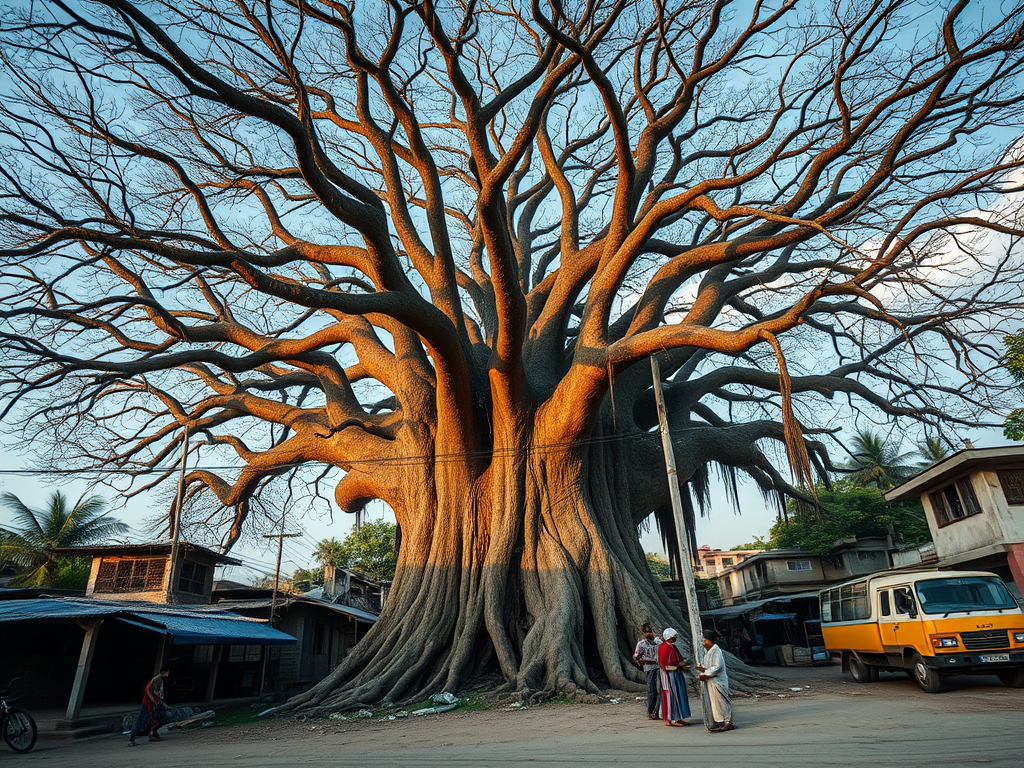
The old banyan tree in the heart of Bommenahalli was dying. Its vast, aerial roots, once thick as a person’s torso and reaching down like grasping fingers, were now brittle and bare. Its canopy, which had sheltered generations from the harsh Karnataka sun, was thinning, letting patches of stark blue-sky peek through. The birds, once a raucous symphony in its branches, were fewer now, their songs muted and hesitant.
This was not a sudden illness. It was a slow, creeping demise, a direct consequence of the changes sweeping through Bommenahalli, changes mirrored in countless other villages and towns across India, across the globe. This was not just about a single tree; it was a microcosm of the larger environmental challenges we face, challenges that the United Nations Sustainable Development Goals (SDGs) aim to address.
For decades, the banyan had been the village’s anchor. Children played beneath its shade, elders shared stories on its cool platform, and weary farmers rested against its sturdy trunk after long days in the fields. It was a living testament to the interconnectedness of life, a haven for biodiversity. Its fruits fed birds and small animals, its leaves provided shelter, and its roots held the soil together, preventing erosion during the monsoons.
But progress, as it is often called, had arrived in Bommenahalli. The narrow dirt tracks were paved, allowing for more vehicles. Small shops blossomed into concrete structures, their fluorescent lights outshining the soft glow of traditional lamps. Fields that once grew diverse crops now yielded primarily single cash crops, demanding more water and chemical fertilizers.
The most significant change, however, was the depletion of the village well, the lifeblood of Bommenahalli for centuries. Increased water usage for the new concrete homes and the water-intensive crops had lowered the water table drastically. The banyan’s deep roots, once drawing sustenance from a reliable source, now struggled to find moisture in the parched earth. This directly relates to SDG 6: Clean Water and Sanitation, highlighting the pressure on freshwater resources due to unsustainable practices.
The shift in agriculture also had a ripple effect, impacting SDG 15: Life on Land. The chemical fertilizers, while initially boosting yields, leached into the soil, reducing its fertility over time and contaminating the remaining groundwater. The monoculture farming diminished biodiversity, making the ecosystem more vulnerable to pests and diseases. The once vibrant insect life around the banyan, crucial for pollination and a food source for birds, dwindled.
The increase in vehicles and the use of generators by the new shops contributed to air pollution, a factor affecting SDG 11: Sustainable Cities and Communities and SDG 3: Good Health and Well-being. The air, once clean and carrying the scent of blooming jasmine, now often held a faint haze and the acrid smell of exhaust fumes. The health of the villagers, particularly the elderly and children, began to suffer, with a rise in respiratory ailments.
Even the sense of community, once so strong in Bommenahalli and fostered under the shade of the banyan, started to fray. The new, individualistic lifestyles brought a disconnect, a weakening of the traditional bonds that had held the village together. This indirectly touches upon SDG 16: Peace, Justice, and Strong Institutions, as environmental degradation can often exacerbate social inequalities and tensions.
A young environmental science graduate, Priya, returned to Bommenahalli after her studies. She had witnessed the slow decline of the banyan during her visits home and felt a growing unease. Seeing the once majestic tree now struggling for survival ignited a passion within her to act.
She started by talking to the elders, listening to their stories of the banyan in its prime, of the traditional farming practices that had sustained the land for generations. She then spoke to the younger generation, explaining the interconnectedness of the environment and their own well-being, linking the dying tree to the polluted air they breathed and the dwindling water supply. This was her way of contributing to SDG 4: Quality Education, by raising awareness and promoting understanding of environmental issues.
Priya organized meetings, using simple language and visual aids to explain the science behind the changes. She spoke about water conservation techniques, the benefits of organic farming, and the importance of planting native trees to restore biodiversity, directly addressing SDG 13: Climate Action by emphasizing the role of trees in carbon sequestration.
Initially, there was resistance. Some dismissed her concerns as the ramblings of a city-educated girl. Others were hesitant to change practices that had become ingrained. But Priya persisted, patiently explaining the long-term consequences of inaction, highlighting the link between a healthy environment and a prosperous future (SDG 8: Decent Work and Economic Growth, as sustainable practices can create new economic opportunities).
Slowly, minds began to change. Some farmers started experimenting with organic farming methods. Villagers began to repair and clean the old village well. Children, inspired by Priya’s enthusiasm, started a small nursery to grow native saplings. The local council, influenced by the growing awareness, began to implement stricter regulations on water usage and waste disposal (SDG 12: Responsible Consumption and Production).
The banyan tree still looked frail, but there was a glimmer of hope. New shoots were appearing on some of its branches, a testament to the resilience of nature and the growing awareness within the community. The birds, though still fewer, seemed to sing with a little more confidence.
The story of the dying banyan and the awakening of Bommenahalli is a reminder that environmental challenges are complex and interconnected, touching upon all aspects of sustainable development. It underscores the importance of environmental journalism in bringing these issues to light, in fostering understanding, promoting accountability, and inspiring the collective action needed to protect our natural world for future generations. The journey to a truly sustainable Bommenahalli is long, but the first steps, inspired by a dying tree, have been taken.
The banyan sighed, its leaves grew thin,
The well ran low, a worried din.
But Priya spoke, with facts so clear,
“For water clean, and life held dear,
Let us change our ways, for earth’s sweet sake,”
So Bommenahalli starts to wake.
 The Momma Clan
Leave a comment